
What Is AI-Based Test Generation and How Does It Transform QA?
Traditional QA struggles to keep up with rapid releases, leading to missed bugs, repetitive test writing, and wasted hours. AI‑based test generation uses machine learning models to automatically create test cases from user stories, UI logs, and functional specs – covering positive, negative, and edge scenarios in minutes instead of days. At TestUnity, we help you reduce test authoring effort by up to 80%, accelerate release cycles, and achieve defect‑free software with confidence.















































What Are the Key Benefits of AI‑Based Test Generation?
80% Less Manual Effort
Automate test creation – free your team for exploratory testing and higher‑value work.
Faster Time‑to‑Market
Generate test cases in minutes, not days – keep pace with agile sprints and continuous delivery.
Higher Test Coverage
Catch edge cases and hidden defects that manual test design often misses.
Tools We Use For Testing



How Does TestUnity Deliver AI‑Based Test Generation?
🎯 Key Takeaways
- AI‑based test generation eliminates up to 80% of manual test authoring effort.
- Ideal for agile teams – tests regenerate automatically as requirements evolve.
- Integrates with Selenium, Cypress, Jira, TestRail, and CI/CD pipelines.
- TestUnity combines AI generation with human QA oversight for maximum accuracy.
Make the most of TestUnity’s software testing services to provide an impeccable experience to your users
Why Choose TestUnity for AI‑Based Test Generation?
- AI‑driven test coverage with human oversight for high accuracy and reliability
- Auto‑generated test cases from user stories, logs, and functional flows
- Seamless integration with Selenium, Cypress, Jira, TestRail, and CI/CD tools
- Continuous test suite updates aligned with agile sprints and feature changes
- End‑to‑end support – from test creation to validation, triage, and optimization

Related Case Studies
Automation Testing of GDPR App
GDPR App required rapid test creation across multiple microservices. We applied our AI-based test generation engine to their user stories and API specifications, automatically producing 200+ functional and integration test scenarios in under 48 hours.
Key result: 80% reduction in test scripting time, 60% faster regression cycles, and zero critical bugs post‑launch.
Read Full Case Study →
Functional Testing of Travel Tech Website
Travel Tech's booking engine involved 500+ user journeys across web and mobile. Our AI models analyzed their UI logs and automatically generated comprehensive test scripts covering complex multi‑step workflows, edge cases, and error validation.
Key result: 500+ test cases generated in 2 weeks, 90% reduction in manual scripting, and 100% functional coverage achieved.
Read Full Case Study →
Frequently Asked Questions About AI‑Based Test Generation
-
What is AI-based test generation, and how does it work?
AI-based test generation uses machine learning and natural language processing (NLP) to automatically create test cases. It interprets user stories, UI logs, or functional specs to generate accurate, reusable test scripts – covering positive, negative, and edge scenarios in a fraction of the time manual methods require.
-
How much manual effort can this eliminate?
In most cases, up to 70–80% of test authoring effort is eliminated. Our models learn from your flows and create detailed scripts instantly – freeing QA teams to focus on exploratory testing, business logic validation, and continuous test improvement.
-
How accurate are these AI-generated test cases?
Each test is generated based on actual workflows and validated against expected outcomes. We also layer human QA oversight to eliminate false positives and ensure accuracy over multiple sprints – giving you consistent, reliable test coverage across versions.
-
Is AI-based test generation suitable for agile teams?
Yes. It's built for agility. As stories evolve sprint to sprint, AI instantly regenerates relevant test cases – supporting rapid releases, continuous testing, and regression automation without waiting on manual test teams to catch up.
-
Can we integrate this into our current QA and dev setup?
Absolutely. Our service supports integration with all major testing tools (e.g., Selenium, Cypress), ALM platforms, and CI/CD pipelines – ensuring smooth adoption without replacing your current processes or infrastructure.
Latest QA Blogs

Churki — India’s First AI Vedic Pandit App Is Now Free on Android and iOS
A new AI app called Churki has launched in India, and it solves a problem that 500 million Indians face every day. Consulting a Vedic Pandit traditionally costs Rs.10–50 per minute, requires an appointment, and is simply not available at 2am when most people actually need guidance. Churki removes every one of those barriers — […]
Design Patterns in Test Automation: Page Object, Factory, Facade & Beyond
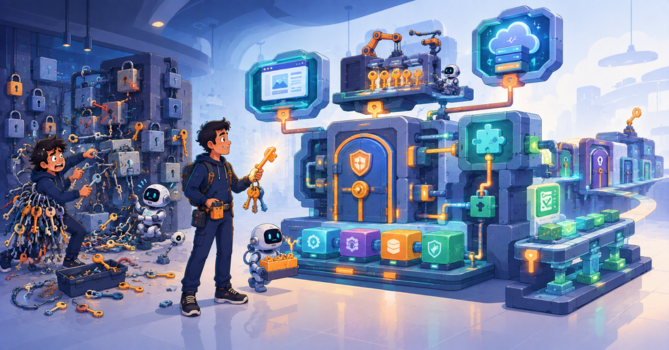
You know the Page Object Model. But your test framework is still messy. Tests are hard to maintain. New team members struggle. There must be a better way. There is. Design patterns in test automation are proven solutions to recurring problems. They go beyond basic Page Object to give you a complete architecture that scales. This guide […]
Get In Touch
Connect with us directly


Our credentials